Network cabling training module
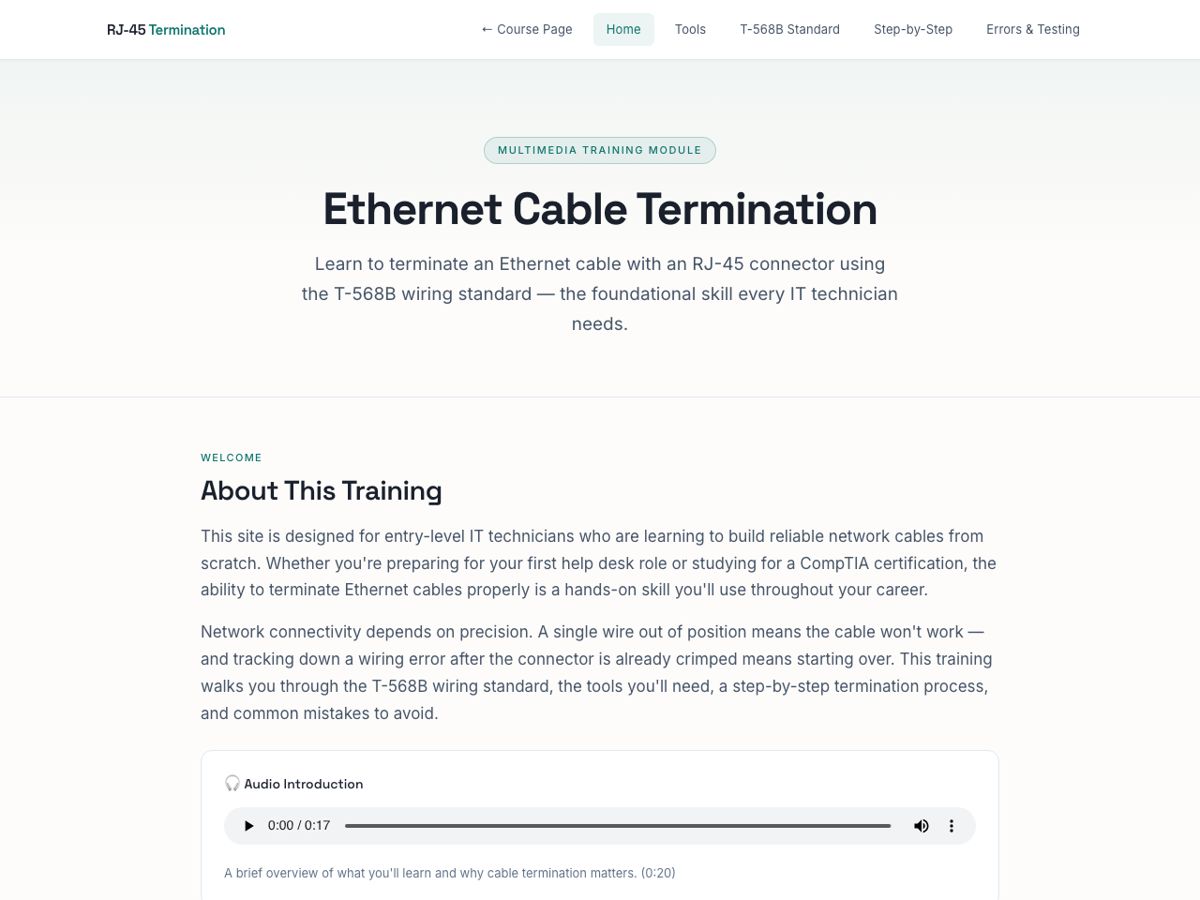
A five-page interactive training module that takes a new technician from identifying the tools to diagnosing a bad cable, built for a graduate multimedia course and revised after instructor feedback.
The problem
Terminating an Ethernet cable is a small skill with an unforgiving failure mode. One wire out of order and the cable does not work, and by then the connector is crimped and the work starts over. Written procedures exist everywhere; what new technicians lack is the ability to see the error before it is permanent.
Who it was for
Entry-level IT technicians: help-desk hires and CompTIA candidates who have read about the T-568B standard but have not built a cable. No assumed hands-on experience.
What I analyzed
- The task itself, broken into its steps: tools, color sequence, strip and untwist, order and seat, crimp, test.
- Where learners fail: the color sequence (memorization) and post-crimp diagnosis (recognizing what a tester result means).
- Which multimedia principles apply to each step. Procedure steps get narration over annotated images (modality and contiguity); the sequence gets a practice activity, not another diagram.
What I decided, and why
- Two interactive activities, placed where the errors happen. A drag-and-drop for the T-568B color order, and a cable-tester simulator that shows the LED pattern for common faults so learners practice diagnosis before they ever crimp a real cable.
- Five short pages instead of one long one, in task order, so the module doubles as a job aid a technician can return to at the bench.
- Narrated audio and a short video for the physical steps rather than text, because the motion matters and reading while handling a crimper does not work.
- After feedback: moved from a dark theme to a light one for print and bench readability, and tightened the visual hierarchy so the activity pages stand apart from the reference pages.
What I built
Home page with an audio introduction; Tools; the T-568B standard with the drag-and-drop; a step-by-step termination procedure with video; and Errors and Testing with the cable-tester simulator. Hand-coded HTML, CSS, and JavaScript with recorded audio scripts.
Result
Graded 201/200 on the original submission; the revised version addresses the instructor's feedback on theme and hierarchy. It is the work sample I point people to first when they ask what I mean by scenario-based design.